From 2020 until its release in 2022, my team and I worked on the fantastic Teenage Mutant Ninja Turltles license. We had the opportunity to create truly exciting content to support the game’s launch, from designing the logo to creating a brand-new animated opening sequence and finally working on the title’s final packaging. The workload was intense, but the experience was incredibly rewarding.
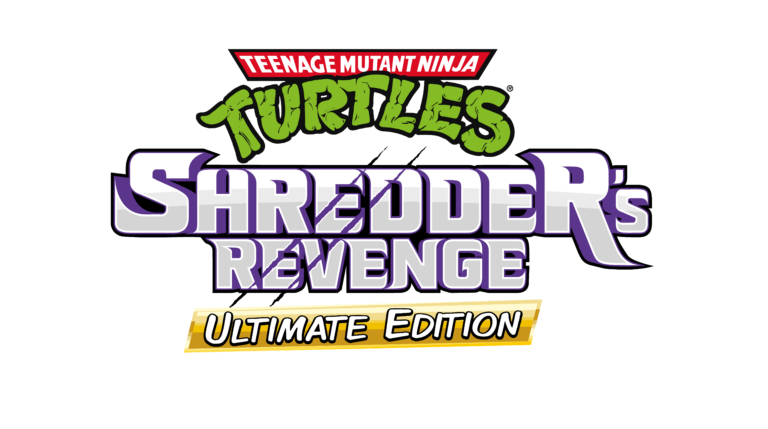
Creating the TMNT Shredder's Revenge Logo
From the very start, our plan was to put Krang at the center of the game. The working title was Return of Krang and with Tribute we wanted to treat the project as a spiritual sequel to Turtles in Time. I quickly sketched an early logo concept that closely echoed the original style from that era.
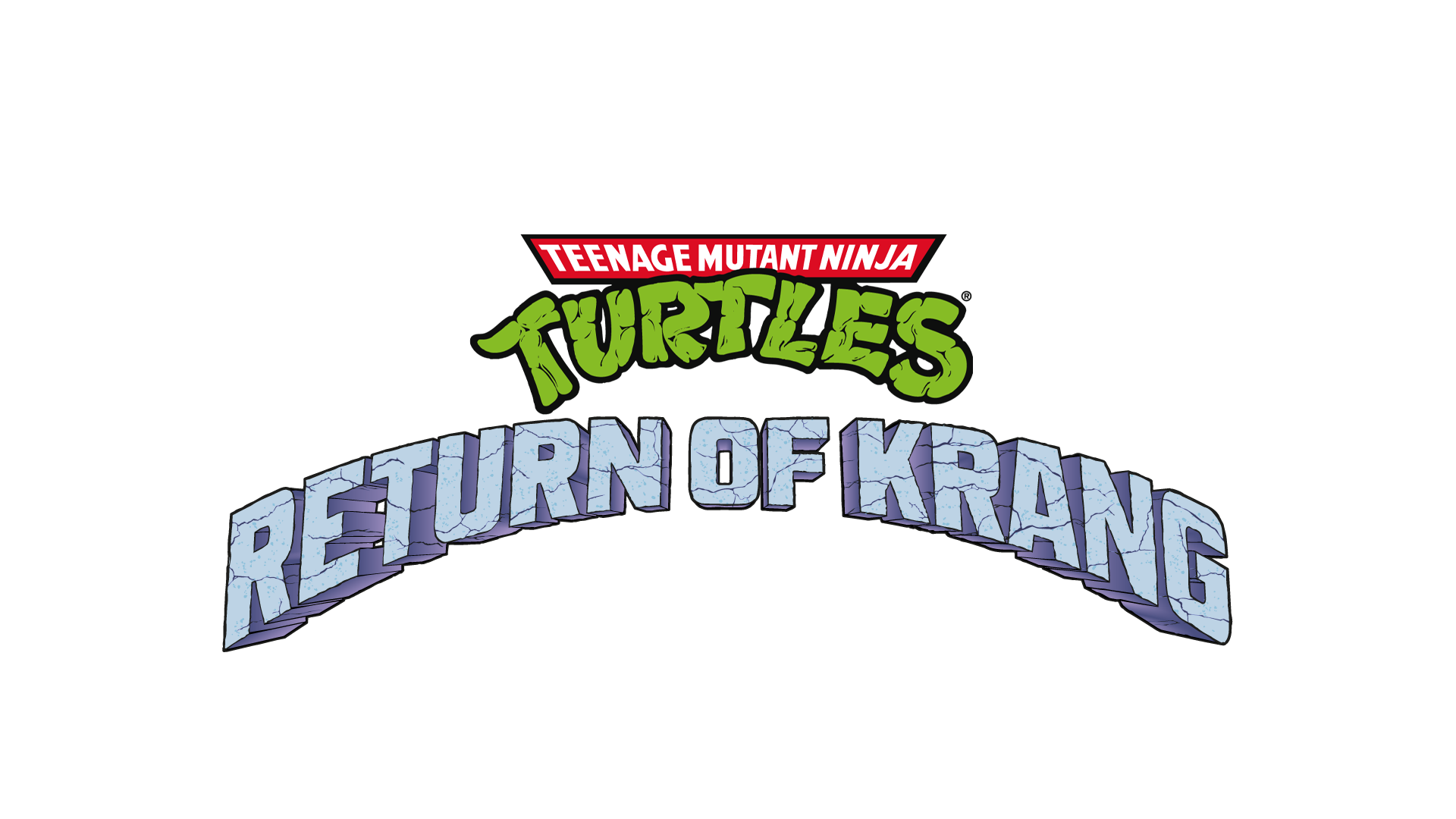
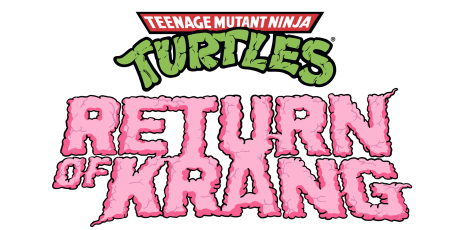
It did not take long to realize that this idea was neither very original nor the right creative direction. Still, I liked the idea of a logo that strongly reflected the main villain. I tried a new approach, taking inspiration from Krang’s grotesque, viscous texture, essentially a limbless brain with visible veins. The game was eventually renamed to what we know today, but this stage was crucial. It showed us that the logo needed to offer something new rather than leaning on nostalgia.
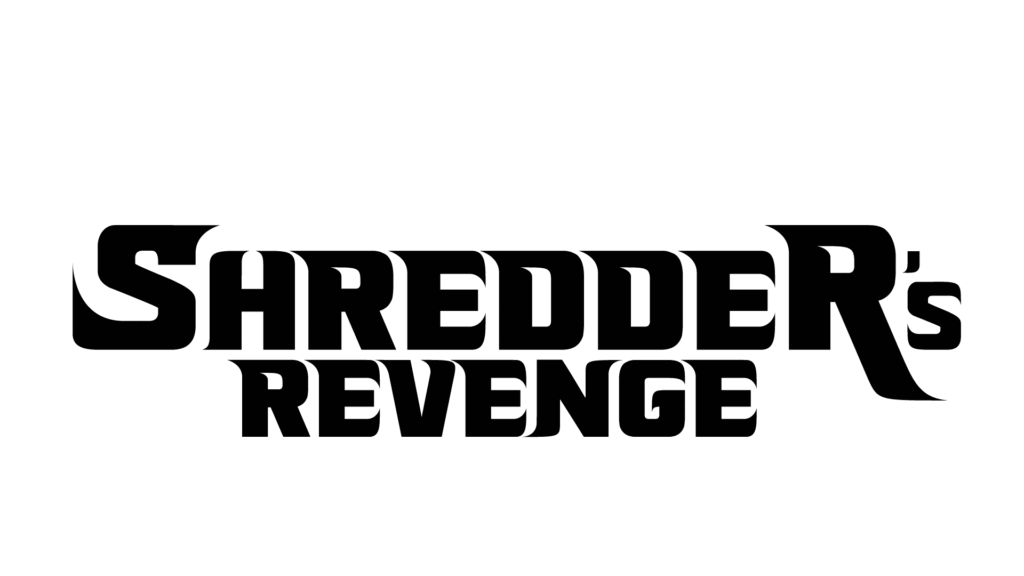
Once the final title was set, the process involved numerous iterations to truly capture the vision I had for the game. I kept the idea of drawing from the villain’s shape and texture, refining the design each time to make it cleaner while keeping the dynamic and menacing energy I wanted.
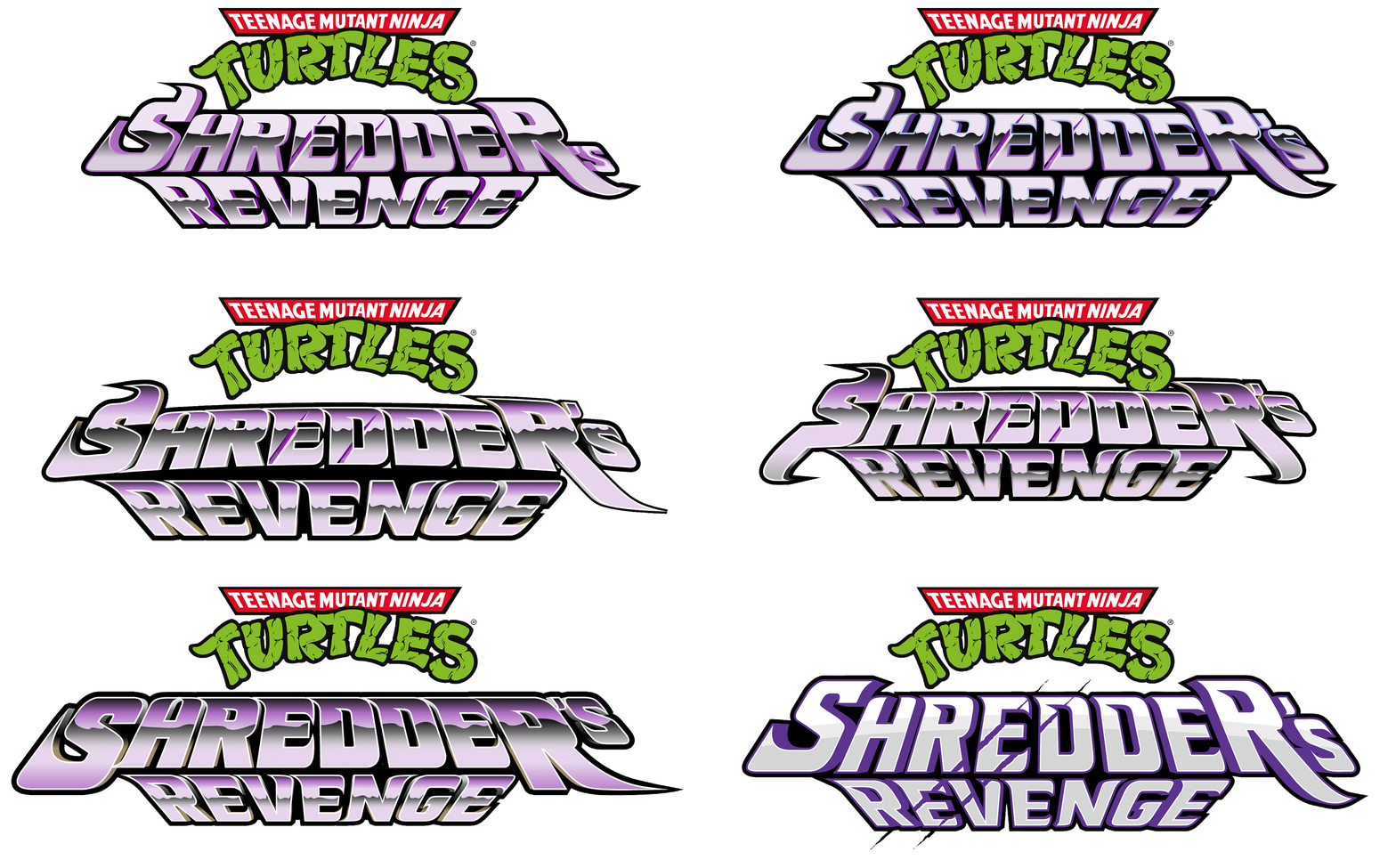
Multiple rounds of feedback with Nickelodeon followed, helping us refine the direction and finally land on a logo that felt fresh and original. Throughout the finalization, I always kept in mind its future role in animation, ensuring it would work seamlessly in motion as well as in print.
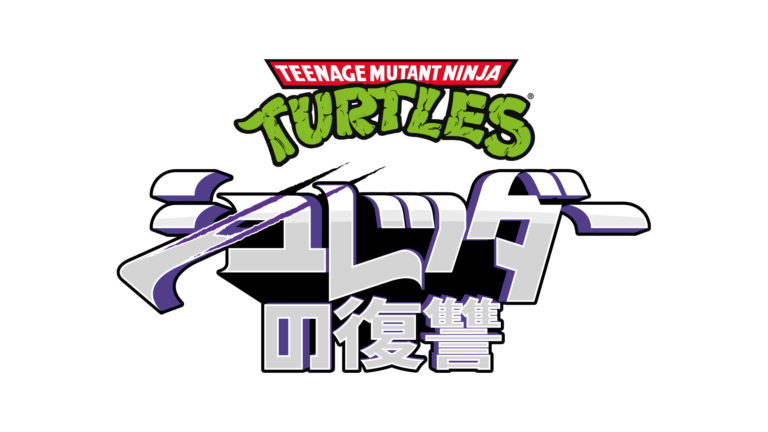
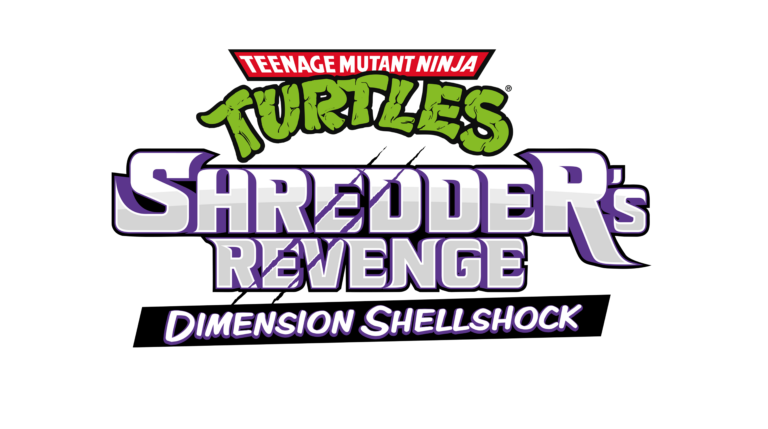
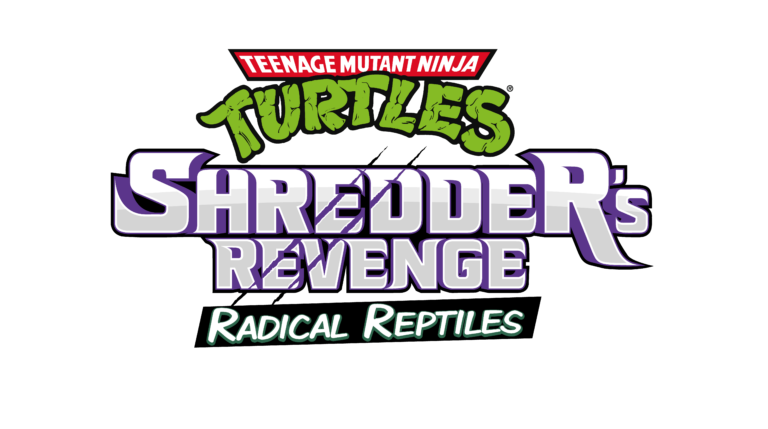
I also created a version of the logo for the Japanese market. We never ended up using it, but it does exist. For the DLCs, I designed a few variations of the logo. In truth, this mostly involved adding a subtitle to the original logo.
Animating the Logo
Once the logo was approved, I turned my attention to its animation. The animation would be primarily used across all trailers as well as on various social media posts.
For this animation, I needed to create something that would be fast and display quickly. I also wanted to amplify the “sharp” quality of Shredder’s armor, which inspired the logo.
At first, a zoom out from the original TMNT logo helped with the transitions. I knew that for a trailer it would be easier to use the logo this way without needing complex transitions, as a simple cut would do the job.
Once the TMNT logo was in place, I used a zoom in to reveal Shredder’s Revenge in two stages. This back-and-forth use of zoom out and zoom in naturally created the dynamic effect I wanted for the logo.
Finally, I designed one last animation to display the two marks on the text, representing the claws on Shredder’s armor. A subtle effect allowed them to appear simply while adding the final gleaming touch that completes the animation.
The Trailers
Preparing for the game’s release required a multitude of trailers. From the reveal to the launch, including announcements for the various characters, there were a lot of reveals. Probably more than for Streets of Rage 4!
One of the most interesting was the reveal trailer. The idea was to announce the game with an intro cinematic inspired by the opening sequence of the 1980s animated series. The goal was to recreate this opening but modernize it with more advanced animation and a punchier soundtrack.
This meant working on two major tasks in parallel.
We once again collaborated with the agency Wizz, with whom we had worked on the Windjammers 2 trailer, and in particular with Garry Levesque, whom I know well and share a similar creative vision with. Over the months, we worked together on this cinematic, knowing which characters would be revealed, which environments to include, as well as vehicles and skateboards. All of these developments naturally required Nickelodeon’s greenlight. They remained very attentive to our proposals and helped fine-tune the details to fully respect the integrity of the license.
We had several ideas for interpreting the original soundtrack. Names like Jack Black from Tenacious D were suggested, but in the end we chose Mike Patton from Faith No More. I have been familiar with the band since the 1990s, and I knew it was the right choice to evoke a strong emotional reaction from fans. After a few discussions with his agent, we were able to share our project with Mike, who immediately embraced the idea of covering the track. Within a few weeks, the song was recorded, mixed, and mastered to perfectly match the visuals produced by Wizz.
Visually, the result is truly striking. There is no lag, and the sequences flow seamlessly. Among all the trailers I have worked on at Dotemu, this one is by far my favorite.
Collaboration with Wu-Tang-Clan
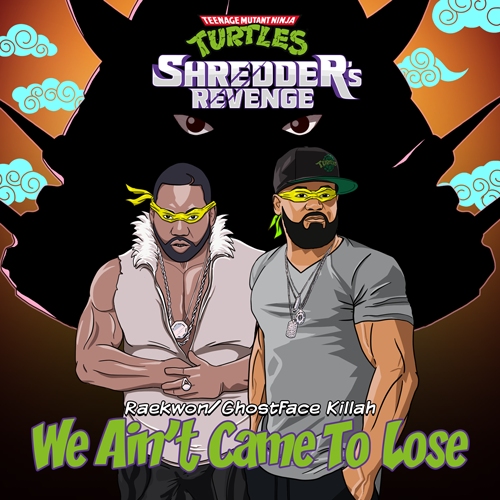
To finish on a cool note from this project, we collaborated with Wu-Tang to produce a track that accompanied the game at its launch. I was very excited about this opportunity and had imagined the possibility of creating a music video for the track, either in stop motion or live action.
Unfortunately, contractual limitations between the rights holders and the band’s managers made this impossible. I was still able to create a visual to accompany the collaboration, but it was never used.
It is a shame, of course, but in this industry missed opportunities are common, and you have to accept things as they are. At least I have the pleasure of being able to share them here.
There are still so many stories to tell about this game. It was truly an important title for Dotemu, as for the first time we managed to reach millions of players and make a lasting impression. The success was tremendous, and it was a huge source of pride for my team and me.